
Birmingham, New York, Hollywood, and Home Again
How Leadership Birmingham Shaped Sam DiPiazza Jr.
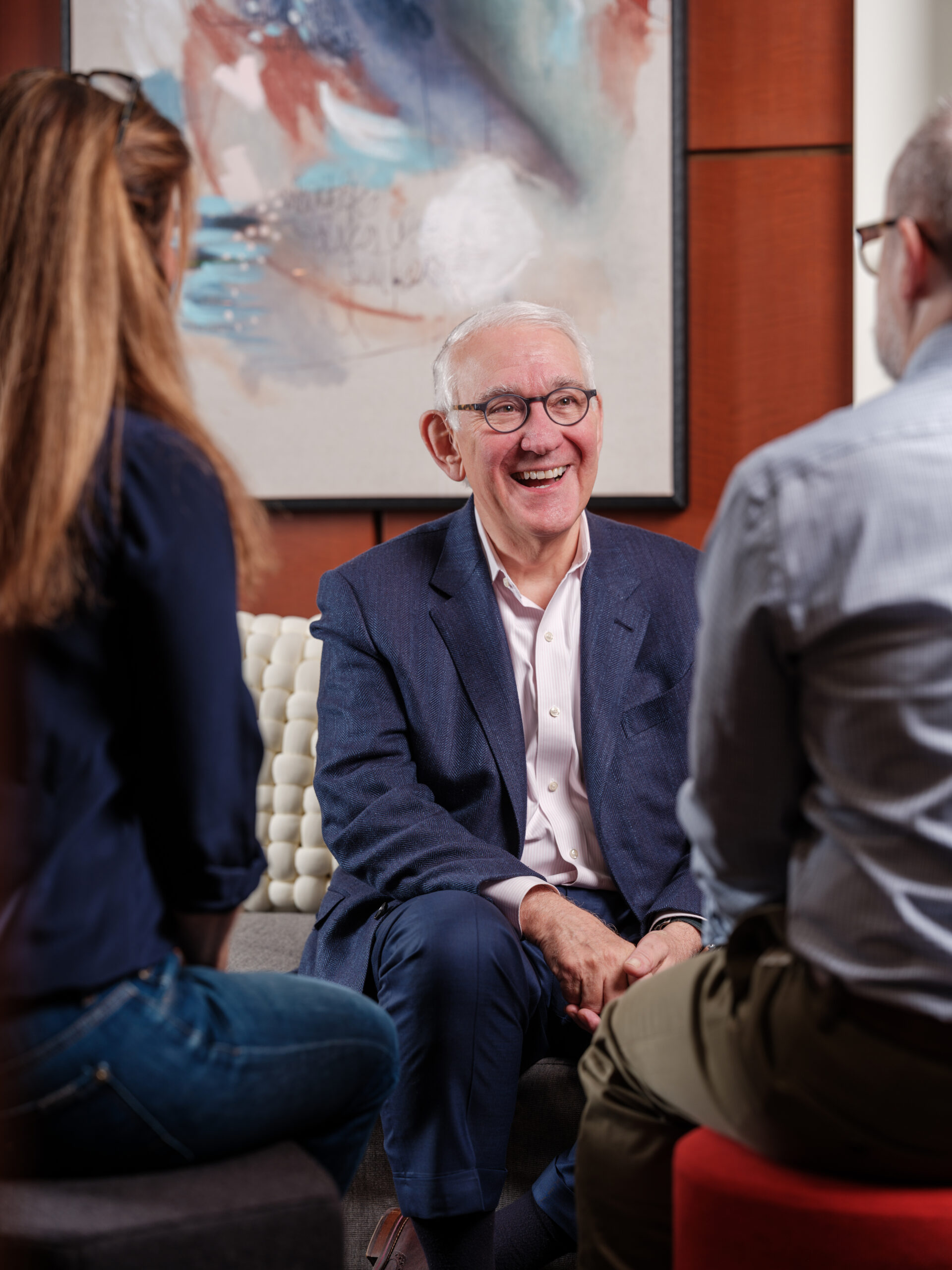
Sam DiPiazza Jr. (LB ’86) hopes you have seen Superman, and he’s not saying that just because he is chairman of Warner Bros. Discovery, the entertainment giant that made the 2025 summer blockbuster. He recommends the movie because it’s “about doing the right thing and living with a commitment to others.”
In other words, it’s a story about becoming an effective leader, and DiPiazza certainly knows a lot about that. His own epic journey led from Birmingham to the metropolises of Chicago and New York, where he directed one of the world’s largest accounting and professional services firms, with 150,000 employees in 130 countries, before heading west to Hollywood. Now based in Denver, DiPiazza still considers Alabama his home and Leadership Birmingham an anchor of his success. Recently he reflected upon some Leadership Birmingham insights and influences that have served him well for four decades.
•••
“Leadership Birmingham helped me understand not only what leadership was about, but what it meant to . . . create positive change and to do it in a hard situation.”
DiPiazza grew up in Ensley, not far from where his Sicilian-immigrant family operated a small grocery store close to Miles College. After earning accounting degrees from the University of Alabama and the University of Houston, he fielded offers from financial firms around the country. But a conversation with Emil Hess of Parisian department stores encouraged him to choose Coopers & Lybrand’s local branch. “Hess said, ‘Birmingham needs people like you to come back and help us be what we can be,’” DiPiazza recalls. In 1979 he became the youngest partner in the company’s history.
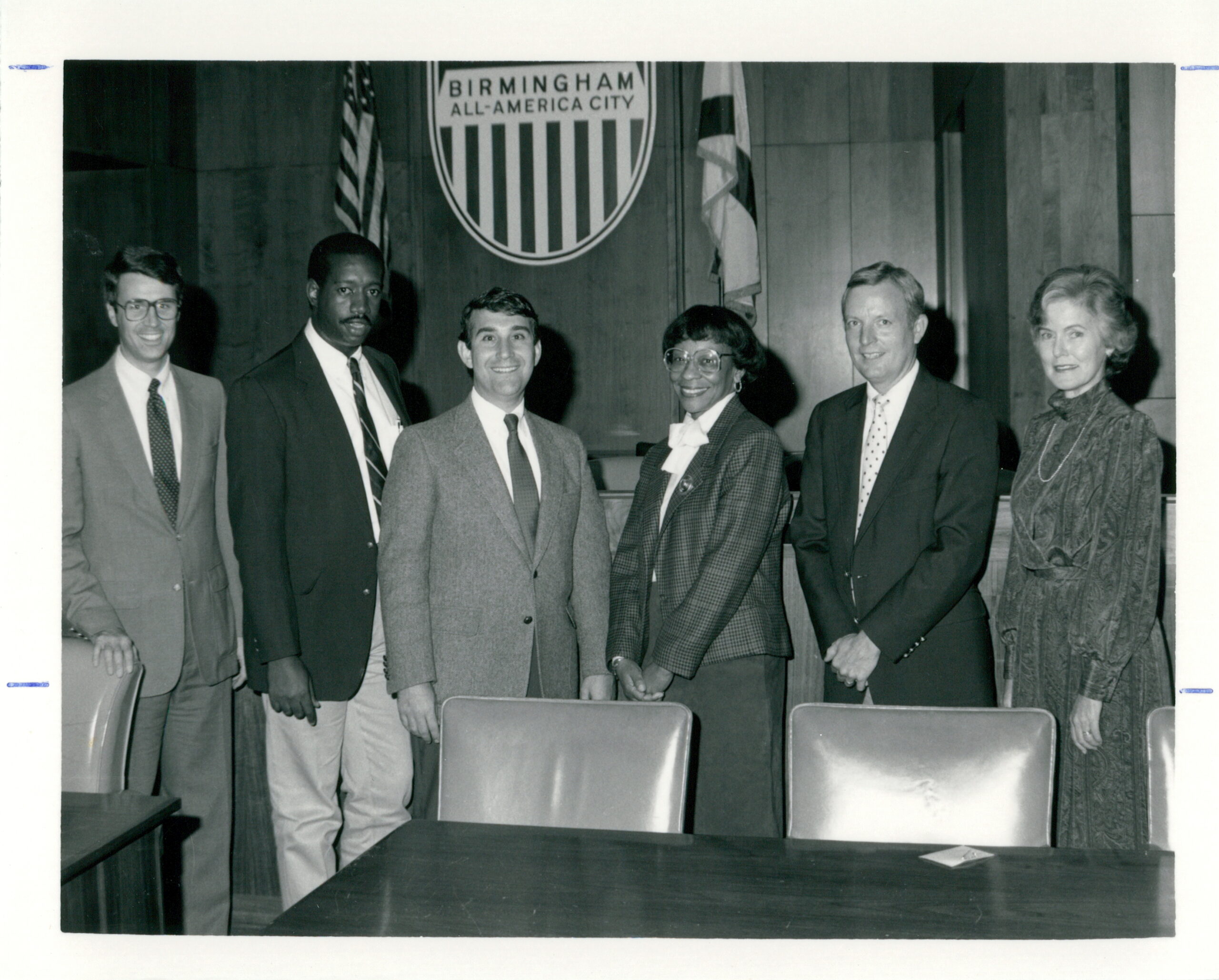
Six years later DiPiazza participated in Leadership Birmingham’s third class. He says the program year “brought you right down to the ground” by presenting an unvarnished view of the region’s challenges and encouraging leaders to listen and learn directly from people across the socioeconomic spectrum. DiPiazza contrasts that with his later experience at the World Economic Forum in Davos, Switzerland, where elite leaders discussed with other elites ways to help disadvantaged people, yet few disadvantaged people were there to share their stories, he says.
Through Leadership Birmingham, DiPiazza observed how local leaders built coalitions and teams to address problems complicated by Birmingham’s toughest obstacles to change, including fragmented government and scarce resources from a lack of wealth. Those continue to be impediments 40 years later, he says, but the region has a big advantage over many other cities because people in Birmingham “just connect better . . . and the dialogue is so much better.”
•••
“You first have to listen, and to understand, and to put yourself in the shoes of the person you’re talking to. And you have to build a relationship. Then you can create change. If you start creating change without . . . understanding and listening and relationships, it’s not going to be lasting.”
When DiPiazza left Alabama in 1991 — first to manage the Coopers Chicago office and then to New York to lead the company’s U.S. and global businesses — he found himself in bigger, wealthier, more complex environments with their own unique issues. Yet he quickly discovered that the lessons of Leadership Birmingham still applied. In Chicago, for example, DiPiazza observed that the network of leaders advocating for social change resembled Birmingham’s group. In New York, he reminded himself to identify priority areas where he could make a difference, because “no one person is going to change the whole thing,” he says.
DiPiazza faced key career challenges in New York. He helped shepherd the merger of Coopers & Lybrand and Price Waterhouse into PricewaterhouseCoopers (PwC), though initially the cultures of the two firms didn’t mesh well, he recalls. In addition, “I had 8,000 partners,” he says. “How do you get really high-performing, thoughtful people to align themselves and pull the same direction?” Then came the 9/11 terrorist attacks, which claimed the lives of five PwC employees on the airplanes that crashed into the World Trade Center.
Working through the emotions of that time and forging a sense of unity depended upon the meaningful relationship building DiPiazza had practiced in Leadership Birmingham. “Our colleagues needed to believe that you understood them,” he says. “You understood their issues. You understood what they needed and what their obstacles were.”
•••
“Education was probably the issue I took the most out of in Leadership Birmingham. I’ve been involved in education ever since then.”
DiPiazza says Leadership Birmingham opened his eyes to disparities among school systems and the limitations those can place on students’ future opportunities. “The teachers were really working hard,” he says. “They were really trying, but there were a lot of institutional obstacles.” Providing parents with choices for education became a key theme in his work.
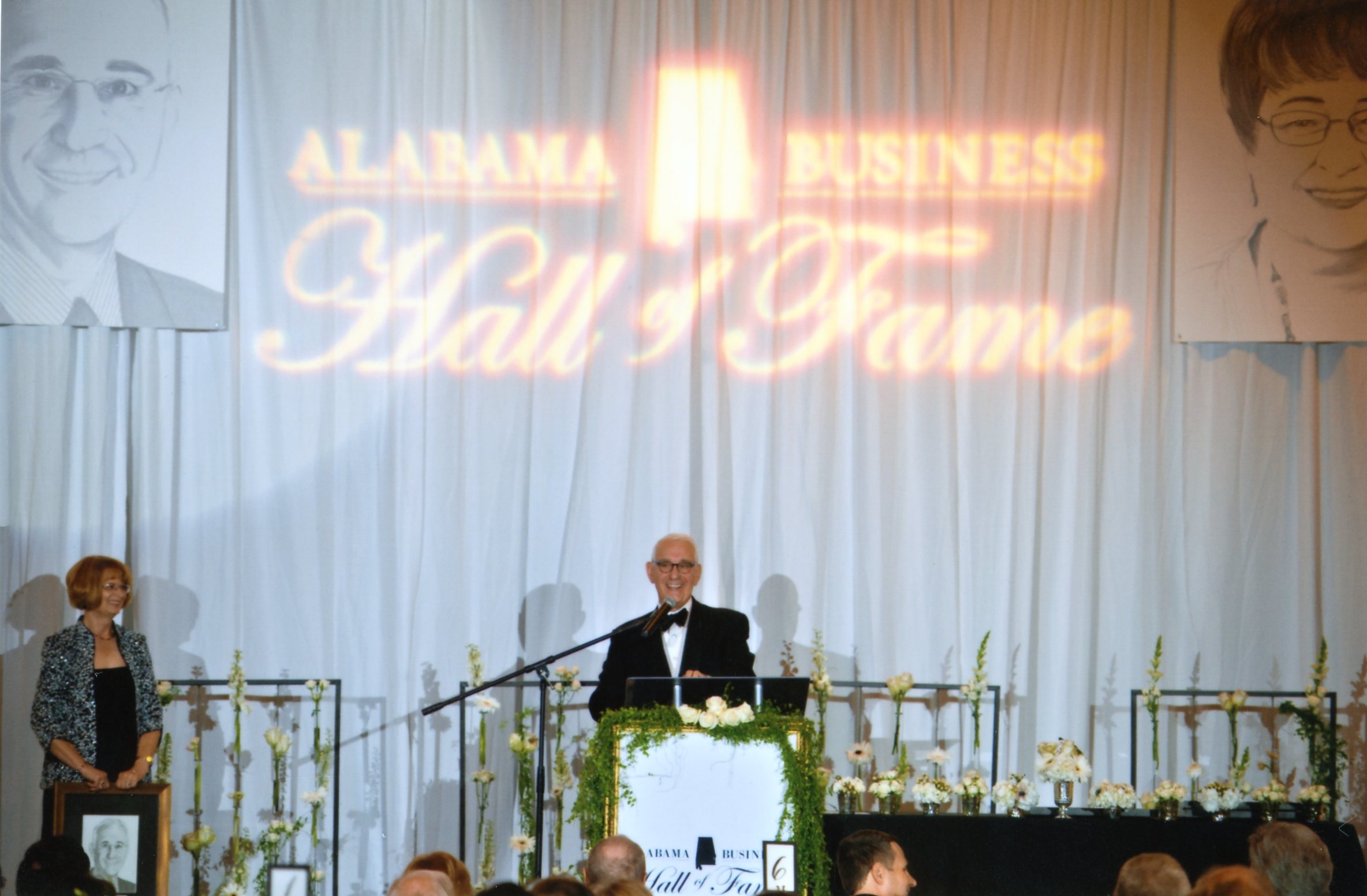
DiPiazza’s first step was to join Birmingham’s chapter of Junior Achievement — the beginning of a decades-long commitment to the organization and its mission of teaching young people to invest in their future. Eventually he became chair of Junior Achievement’s national and global boards. He also has helped create new educational opportunities for children facing disadvantages as a trustee of Seton Education Partners, which operates eight public charter schools in the Bronx and one outside McAllen, Texas, and as a board member of the Inner-City Scholarship Fund of New York City. DiPiazza and his wife, Melody, personally support “dozens of kids on scholarship . . . and our only objective is we want them to fulfill their life dream,” he says.
And DiPiazza hasn’t forgotten the Alabama communities that inspired his passion for education. He is a trustee of Birmingham’s Max and Lorayne Cooper Foundation, which fulfills the wishes of the late Max Cooper, a McDonald’s franchisee, to dedicate his wealth to benefit education in central Alabama. “We’re trying to spend the foundation out over a period of time, making anywhere from $2 million to $4 million of grants a year, all focused on education, all focused on trying to help teachers,” DiPiazza says. Grants have benefited schools across the region, including in Tarrant and Blount County, where the foundation is the largest private funder for those school systems, DiPiazza says.
•••
“Start by changing one life or a couple of lives. Don’t start by trying to change a thousand lives. . . . Then if you can figure out how you can help one or two, you begin to help five or ten, and then get those five or ten to help five or ten more. Soon you have a movement of change.”
DiPiazza admits it’s easy for leaders to feel frustrated when their efforts to bring about positive changes don’t yield a broad impact immediately. “Good change without scale or the ability to scale is pretty limited,” he says. But he offers the advice he shared with members of Genesis Park, a PwC program for young employees that DiPiazza says was modeled in many ways on Leadership Birmingham. After listening to each class describe ideas for improving PwC, he reminded participants that “you have 150,000 colleagues out there. So if the forty of you do great things, that’s nice, but it won’t really matter. If instead the forty of you find a way to engage just ten more people each, and they get ten more people each, then all of a sudden you’ve got thousands that are changing the firm.”
Leaders have to stay involved and keep inspiring others in order to fix longstanding problems and create better opportunities for new generations, DiPiazza says. He adds that he sees evidence of that happening in Birmingham on his frequent trips home to visit his family and to work. “I feel optimistic about Birmingham . . . because it’s got a long legacy of leadership,” he says. “Ultimately you determine success from the people. Are your young people doing what Emil Hess said? Do they stay and invest, or did they leave? And I think now they’re staying.”
This article was originally posted in the Leadership Birmingham Spring 2026 magazine. See the full magazine here.